
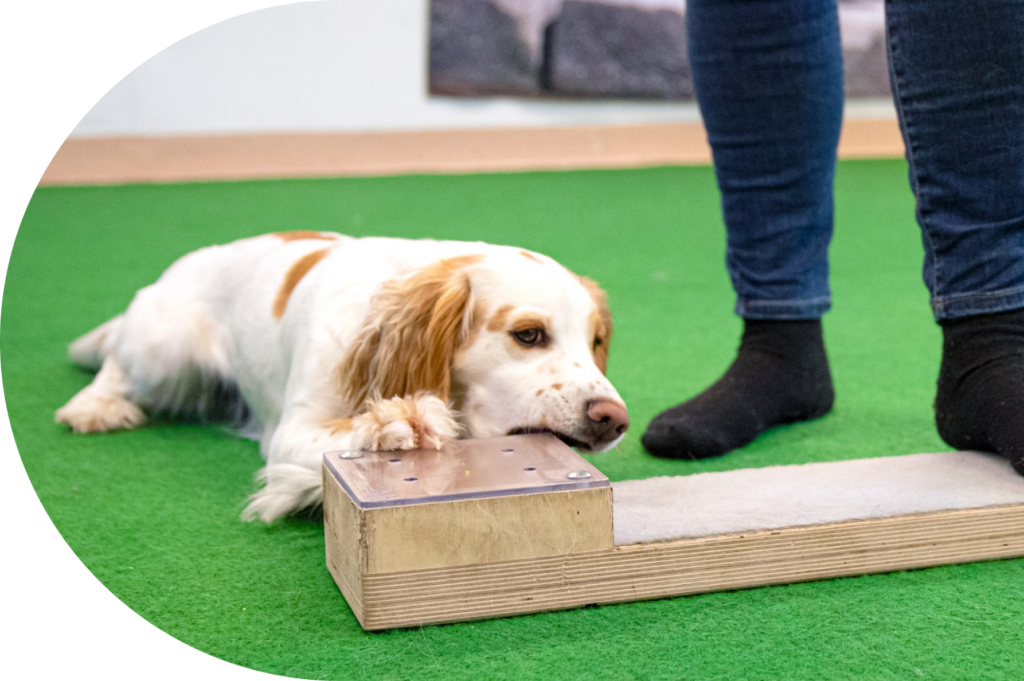
smartDOG™ PUPPY (4-7months) is meant for puppies which are already in their new homes. With this test you can get information of the dog’s personality, and you use test information to direct and plan puppy’s training.
Puppy testing under 8 weeks correlates poorly with adult dog behaviour (Wilsson & Sundgren 1998; Riemer et al 2014). Instead puppy tests done over 3 months correlate much better with adult dog behaviour, and for example the assessment of sociability from a 5-6month puppy towards unfamiliar people correlates well with adult dog personality (Riemer et al 2016).
smartDOG™ PUPPY (4-7months) is meant for puppies which are already in their new homes. With this test you can get information of the dog’s stable personality, and you use test information to direct and plan puppy’s training. Dog’s (as children) vary in their personality and different personalities might need different type of training. While one puppy needs a lot of encouragement and building of self-esteem, the other might need more practices of inhibitory control from early age onwards.
SmartDOG PUPPY is suitable for both working and pet dogs, and the information from test can be used to plan the suitable training for the puppy and also possible prevent the future behavioural problems.
Tiira, K., Tikkanen, A. & Vainio, O. 2020. Inhibitory control – important trait for explosive detection performance in police dogs? Applied Animal Behaviour Science. doi:10.1016/j.applanim.2020.104942
Gácsi M, Kara E, Belényi B, Topál J, Miklósi Á. 2009.The effect of development and individual differences in pointing comprehension of dogs. Animal cognition. 12:471–9.
Riemer S, Müller C, Virànyi Z, Huber L, Range F (2014) The Predictive Value of Early Behavioural Assessments in Pet Dogs – A Longitudinal Study from Neonates to Adults. PLoS ONE 9(7): e101237. doi:10.1371/journal.pone.0101237.
Marshall-Pescini, S., Virany, Z. & Range F. 2014. The Effect of Domestication on Inhibitory Control: Wolves and Dogs Compared. PLoS ONE e0118469. doi:10.1371/journal.pone.0118469.
Passalacqua, C., Marshall-Pescini, S. Barnard, S., Lakatos, G., Valsecchi, P. & Prato Previde, E. 2011. Human-directed gazing behaviour in puppies and adult dogs, Canis lupus familiaris. Animal Behaviour 82: 1043-1050.
Riemer S, Müller C, Virànyi Z, Huber L, Range F (2016) Indivdual and group level trajectories of behavioural development in Border Collies http://dx.doi.org/10.1016/j.applanim.2016.04.021.
Tiira, K, Lohi, 2014. Reliability and validity of a questionnaire survey in canine anxiety research. Applied Animal Behaviour Science http://dx.doi.org/10.1016/j.applanim.2014.03.007
Wilsson, E., Sundgren, P.E., 1998. Behaviour test for eight-week old puppies—heritabilities of tested behaviour traits and its correspondence to later behaviour. Appl. Anim. Behav. Sci. 58, 151–162.